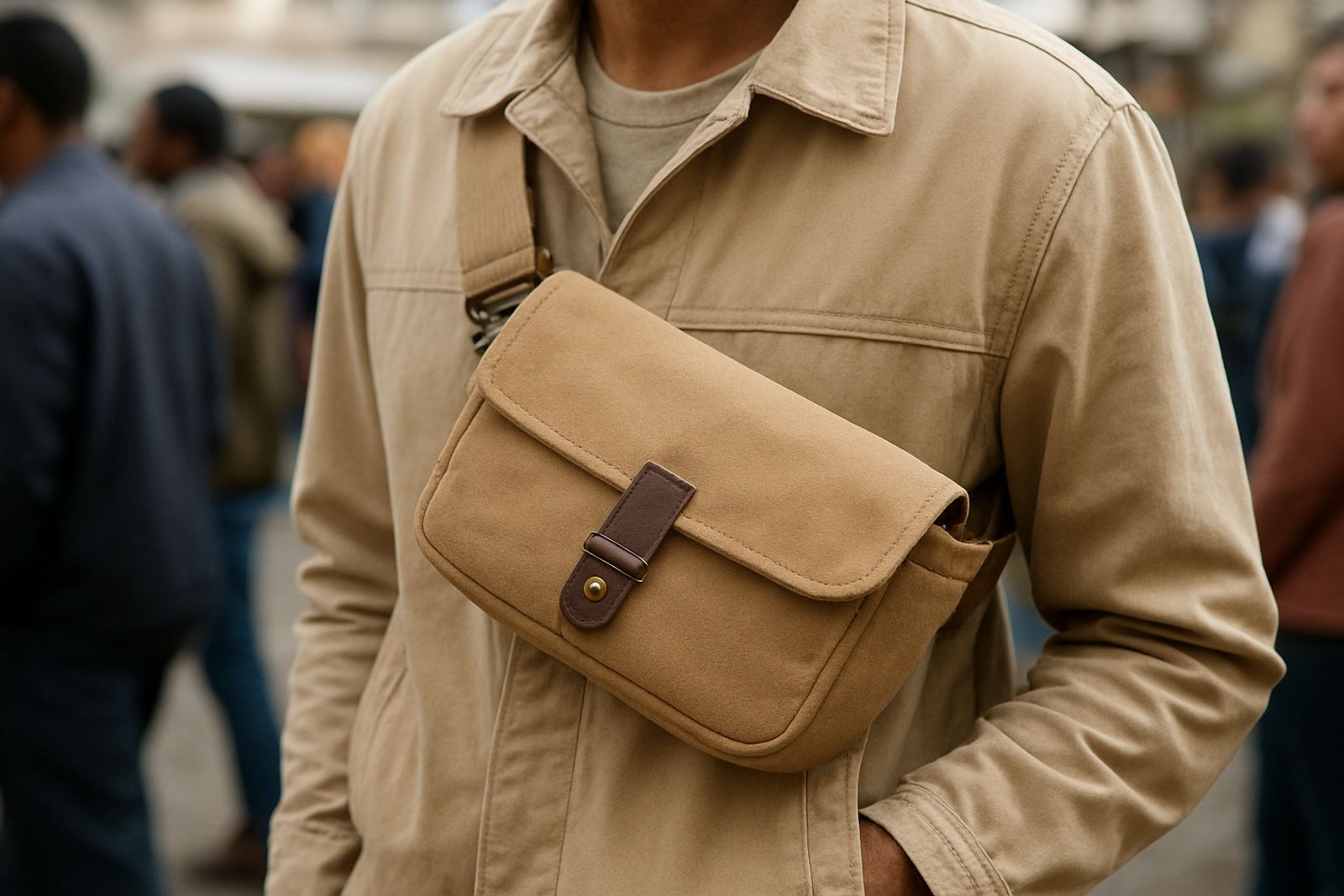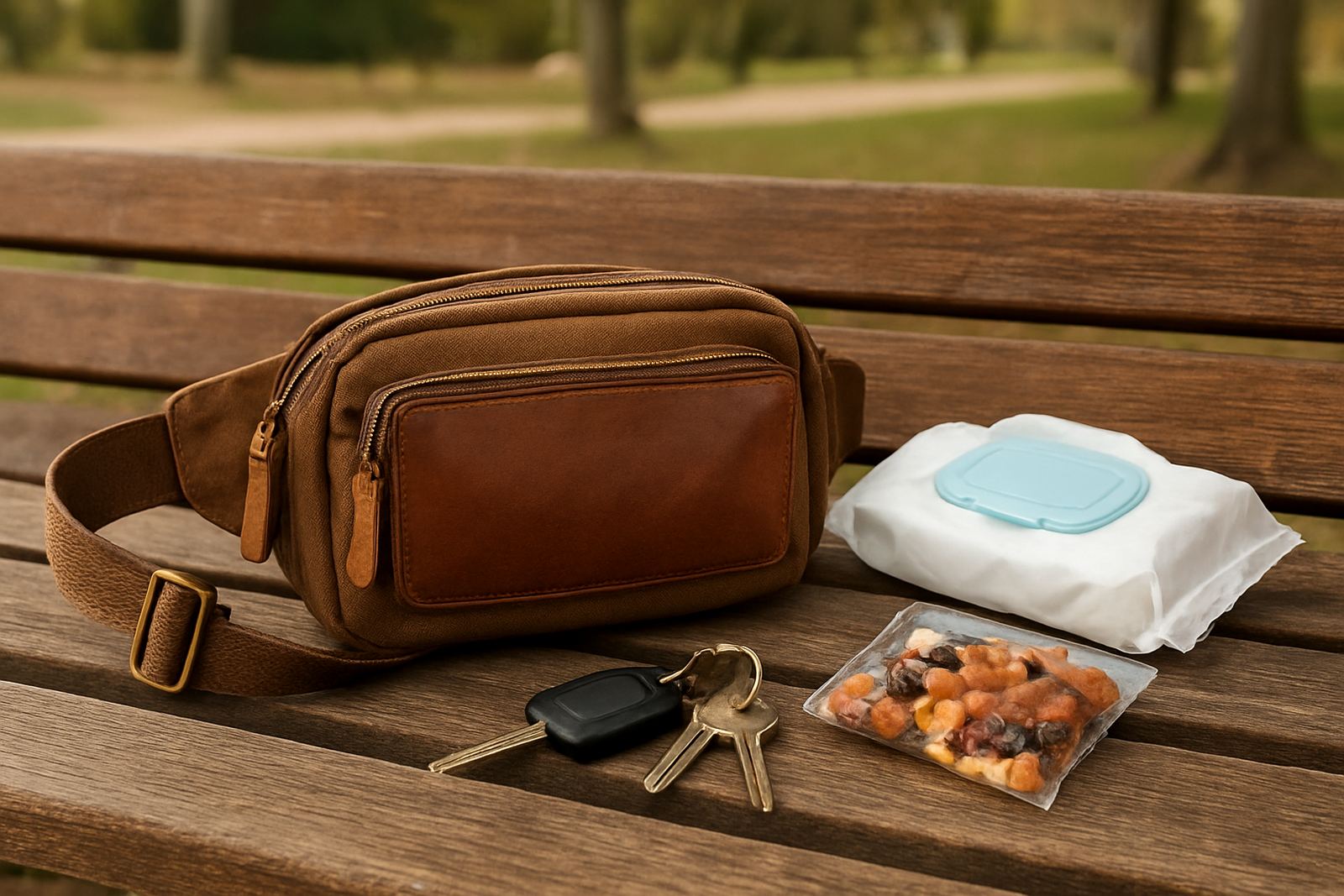

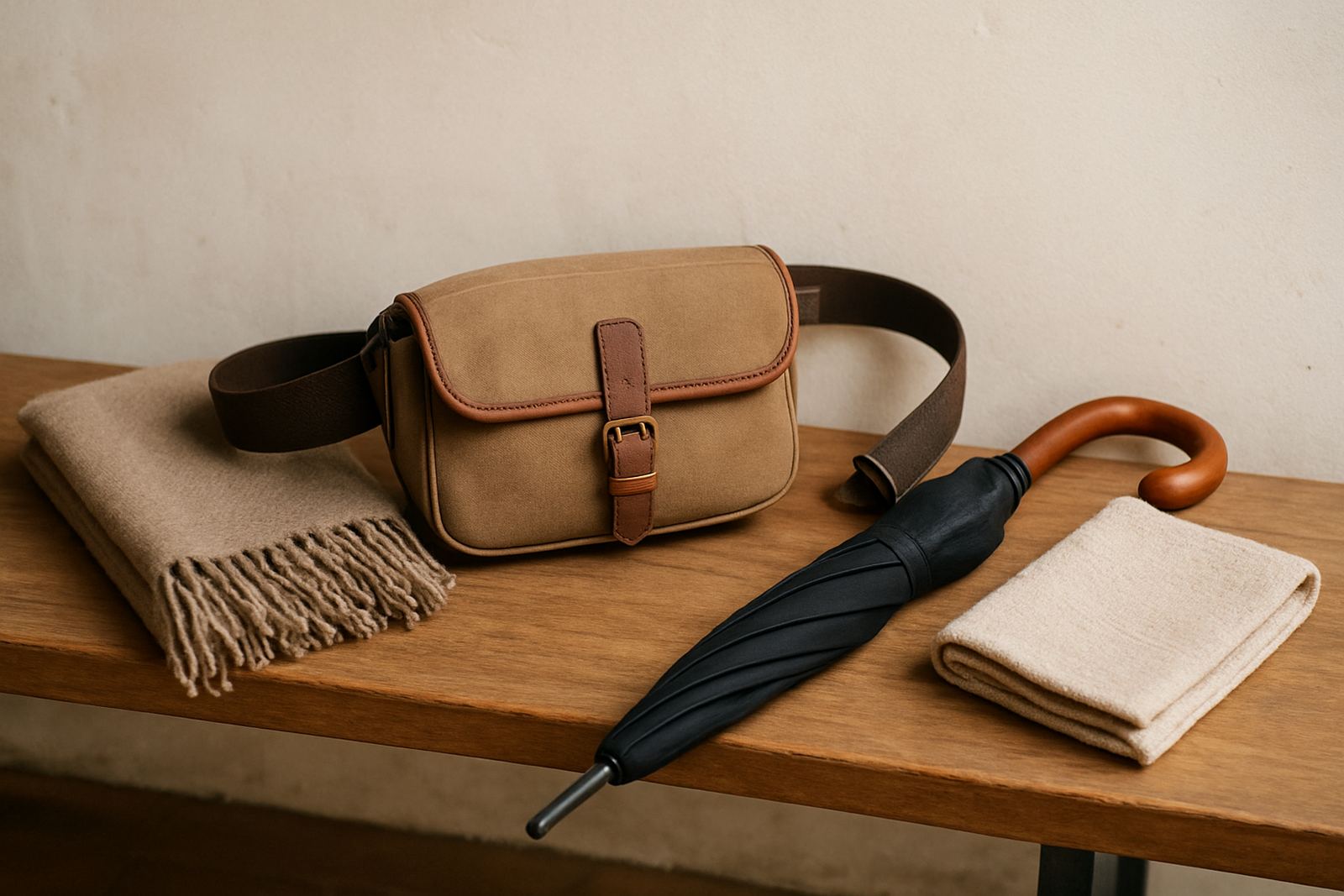
Why winter is harder on belt bags
Winter brings more than just a chill. In Cape Town, Durban and other coastal areas, damp air can sit in seams, stitching and zips for hours after a short shower. Inland places like Johannesburg and Pretoria often have dry cold mornings, then warm afternoons, which means the material expands and contracts through the day. That shift can put extra strain on leather, canvas and hardware.
For everyday carry, festival use and travel, your belt bag gets close contact with the body, clothing and weather. Sweat, rain, dust and sunscreen all build up faster in winter because people tend to wear the same bag for longer outings. If you use one bag for work days and weekends, it is worth giving it a proper check each week instead of waiting until something starts to look tired.
- Check for moisture after each outing, especially around seams and the base.
- Do not pack a wet bag away in a cupboard or car boot.
- Give hardware and zip pullers a quick wipe before storage.
Leather care that holds up in damp weather
Leather needs gentle care in winter, not heavy treatment. If rain spots appear, let the bag dry naturally at room temperature. Keep it away from direct sun, heaters and fireplaces because heat can dry the leather too fast and lead to cracking. A clean, dry cloth is usually enough for surface marks. For deeper dirt, use a slightly damp cloth and then dry the bag straight after.
If your belt bag is used often, a light leather conditioner every few months can help keep the material supple. Use only a small amount and test it on a hidden area first. Too much conditioner can make the surface dark or sticky, which is hard to reverse. On colder days, leather straps can feel stiffer at first, but they should soften again with use if they are looked after properly.
- Wipe off rain as soon as you get home.
- Use a soft cloth, not abrasive pads or stiff brushes.
- Store leather in a breathable dust bag or cotton cover, not plastic.
Canvas care for rain, dust and daily wear
Canvas is practical for winter because it handles daily use well, but it still needs care. If your canvas belt bag gets wet, empty it first and let it air dry fully. A lot of people make the mistake of hanging it next to a heater, but that can cause the fabric to harden unevenly. A shaded, airy spot is usually best. If there is light mud or dust, brush it off once dry before wiping.
Canvas can pick up marks from wet pavements, car seats and public transport. In Cape Town, for example, a morning walk through Woodstock or the city bowl can leave a bag damp by the time you get to work, and then mist or sea air keeps it that way. A weekly spot clean helps keep the fabric looking fresh. If the bag has a lining, check the inside as well because crumbs and moisture can sit there unnoticed.
- Shake out sand, dust and loose dirt before storing the bag.
- Spot clean with mild soap and a soft cloth if needed.
- Make sure pockets and lining are dry before closing the zip.
What to do after a rainy day out
After a wet day, the best thing you can do is slow down the drying process and let the bag recover properly. Open every zip, empty the pockets and wipe the outside first. If the bag has a strap that was soaked through, lay it flat so it dries evenly. Packing it tightly while still damp can leave an odd smell, and in some cases it can affect the stitching over time.
If the bag was exposed to sea spray in places like Gqeberha, Durban or the Cape coast, wipe it down with fresh water on a cloth first, then dry it off. Salt residue can collect on buckles and zips and make them stiff. It is a small step, but it saves trouble later. You do not need anything fancy, just a bit of routine care after each wet outing.
- Empty wet bags straight away.
- Open compartments for better airflow.
- Wipe hardware with a clean, dry cloth after exposure to rain or salt air.
Storage habits that prevent winter damage
Good storage matters as much as cleaning. If you are not using a bag for a while, stuff it lightly with clean paper or soft cloth so it keeps its shape. Do not overfill it. A belt bag that is squashed into a drawer or stacked under heavy items can develop creases and warped panels. In humid homes, especially near the coast, it helps to keep bags in a dry room with a bit of airflow.
For people sharing a home or small flat, winter storage can get messy quickly. Keeping your everyday carry items in one spot makes it easier to check zips, straps and linings before the next outing. If you have more than one bag, rotate them. That gives the material time to rest and can extend the life of both leather and canvas. It is a simple habit but it works well.
- Use breathable covers instead of sealed plastic bags.
- Keep away from damp walls, windows and laundry areas.
- Check stored bags once a month for mould, dust or stiffness.
When a belt bag needs a proper check
Some wear is normal, but a few signs mean it is time to inspect the bag more closely. Loose stitching, a zip that catches, straps that sit unevenly or leather that feels brittle should be looked at before the problem gets worse. If you carry your bag every day for commute, travel or events, small faults can spread quickly.
It also helps to check the fit after winter layers come out. Thick jackets can change the way a belt bag sits on the body, so the strap may need adjusting. If the bag feels unbalanced or moves around more than usual, that can strain the hardware and the stitching. A quick fit check at the start of the season can save frustration later.
- Look for loose threads around stress points and corners.
- Test zips, buckles and clips before long outings.
- Adjust the strap again if you switch between light and heavy clothing.
For customers in Woodstock, Stellenbosch, Somerset West and across South Africa, winter care is really about consistency. A few minutes after each wet day makes a proper difference, and it helps your bag stay useful through the season instead of looking tired by July.