
Why gentle cleaning works better on canvas
Canvas is strong, but it still needs a light hand. Too much soaking, harsh soap, or aggressive scrubbing can fade the colour, stiffen the fabric, and weaken the seams around the zip and strap points. If your bag gets used every day in Cape Town dust, Jozi traffic, or a packed market weekend, small regular cleans are better than one big wash after months of build-up.
The aim is to lift surface dirt, salt, sunscreen, and light spills without pushing grime deeper into the fibres. That keeps the bag cleaner for longer and helps avoid that flat, tired look that comes from over-washing.
- Dust and sand should be removed before any water is used.
- Spot cleaning is usually enough for most marks.
- Always test any cleaner on a hidden section first.
What to keep nearby before you start
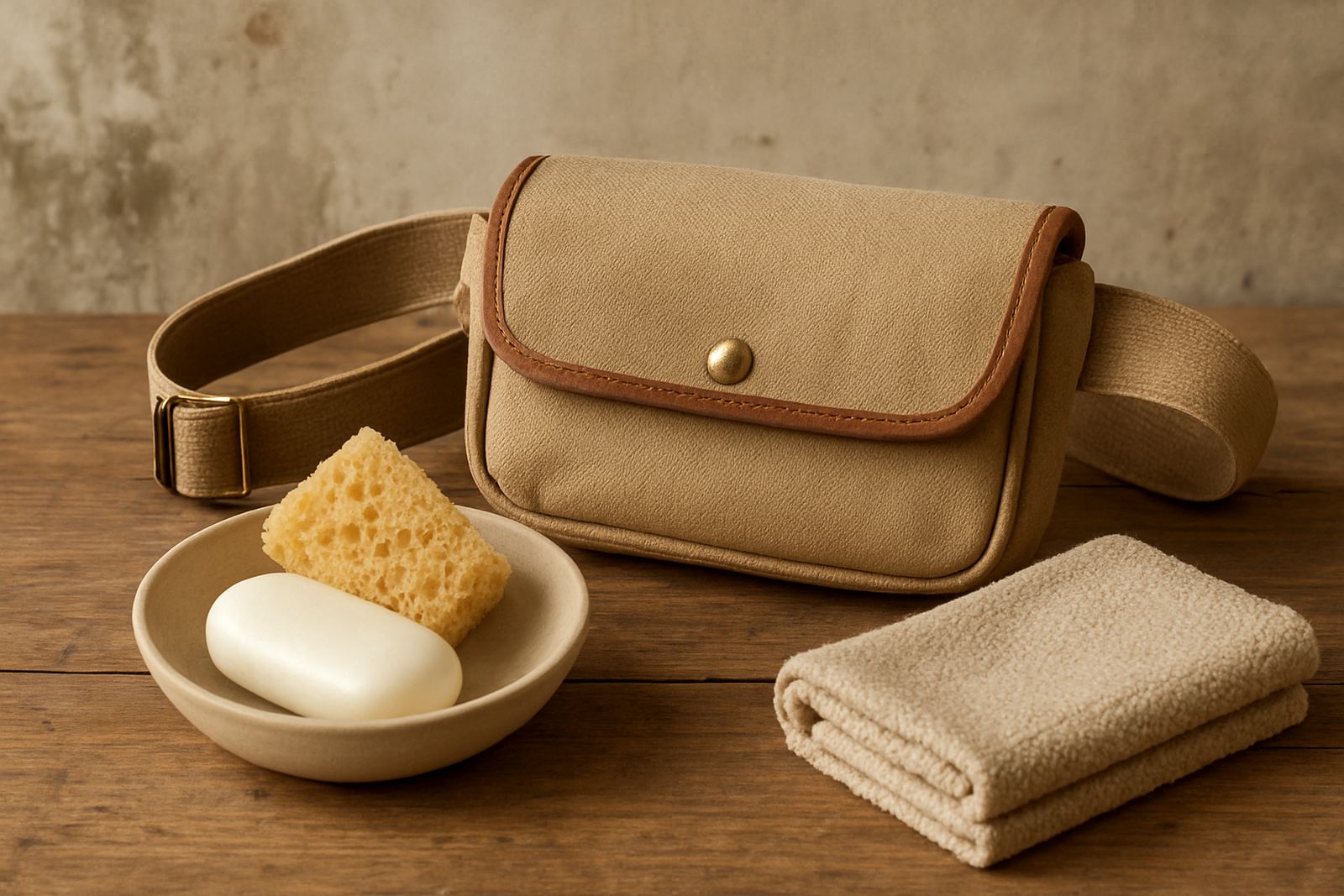
You do not need special gear for a safe clean. A small basin, lukewarm water, a soft cloth, and a mild detergent are usually enough. In coastal areas like Gqeberha or Durban, where salt in the air can leave a light film, a second clean cloth helps remove residue properly so the bag does not feel sticky after drying.
If the bag has a leather trim or leather strap panel, keep water away from those sections as much as possible. Canvas and leather react differently, so treating them the same can cause marks or cracking.
- Soft brush or old soft toothbrush for seams and corners
- Two clean cloths, one for cleaning and one for drying
- Mild liquid soap, not bleach or harsh stain remover
- Paper towel for fresh spills and oil spots
How to clean a canvas belt bag step by step
Start by emptying the bag fully and shaking out dust, crumbs, and sand. Open every pocket and check the lining so nothing gets missed. If there is loose mud, let it dry first and brush it away gently, because wet mud tends to spread and stain more easily.
Mix a small amount of mild soap with lukewarm water. Dip a cloth in the mixture, wring it out well, then wipe the canvas in small sections. For corners and stitched areas, use a soft brush with light pressure. Do not soak the bag or run it under a tap unless the care notes clearly allow it.
For one-off marks, dab rather than scrub. A little patience is usually enough. If a mark remains after the first pass, leave it and try again once the fabric is dry. Repeated hard rubbing can rough up the surface and make the patch stand out more.
- Use circular movements only on stubborn spots, and keep them small.
- Wipe with clean water on a separate cloth to remove soap residue.
- Blot with a dry towel instead of twisting or wringing the bag.
- Keep the zip closed halfway so the shape holds while drying.
Dealing with festival dirt, sunscreen and drink spills
Festival wear is different from office wear. Dust, grass, hand sanitiser, sunscreen and the odd splash of cooldrink can all show up on canvas. Treat these marks quickly. Fresh spills lift more easily than dry ones, and a quick response often means you avoid a full clean later.
For greasy marks such as sunscreen, place a little paper towel on the spot first to absorb excess product. Then use a tiny amount of mild soap with water on a cloth and dab gently. If the bag has been near food stalls or braai smoke, hang it in fresh air after cleaning so any smell can clear naturally. Avoid perfume sprays or strong air fresheners, as they can leave a patchy smell behind.
In warm weather, especially inland areas like Pretoria and Johannesburg, sweat and body oils can build up around the strap and back panel. Wipe these areas often, not just the front of the bag. That keeps the fabric from darkening unevenly.
Drying canvas properly in South African weather
Drying matters just as much as washing. Canvas that stays damp too long can lose shape or develop a musty smell, especially in humid places like Durban or on rainy Cape Town days. After cleaning, reshape the bag with your hands and place it in a shaded, airy spot. A covered stoep or laundry room with good airflow is ideal.
Do not leave the bag in direct sun for hours. Harsh sun can fade canvas and dry it too quickly, which may make the fibres feel stiff. Keep it away from heaters, tumble dryers, and hot car interiors as well. If the inside is still damp after a few hours, turn the bag inside out only if the structure allows it, then let it finish drying naturally.
- Hang the bag by the strap only if the weight is light and the seams are dry.
- Leave zips partly open so air can move through the compartments.
- Check the base and corners before storing it away.
How often should you clean it and what to avoid
For everyday use, a light wipe once a week and a fuller spot clean when needed is enough for most canvas belt bags. A deep clean is not needed after every outing. Over-cleaning can be as harmful as dirt, because the fibres lose their finish and the bag may start looking worn before its time.
Avoid soaking the whole bag, using bleach, using a stiff brush, or scrubbing the same area again and again. Also avoid machine washing unless the care instructions clearly say it is safe. Even then, protect any leather parts and use a gentle cycle only if there is no better option.
- Do not fold a wet bag for storage.
- Do not use coloured cloths that may transfer dye.
- Do not put the bag away in a sealed plastic packet if it is still slightly damp.
- Do inspect stitching after cleaning, especially near the zip and strap attachment points.
Keeping a canvas bag ready for the next outing
A clean canvas bag should still feel practical, not precious. The best routine is simple: empty it often, brush off dust, treat marks early, and let it dry properly. That approach works well whether the bag is used for travel through the airport, a long Saturday at the market, or a walk through Woodstock before lunch.
If a strap feels stiff, a zip starts to catch, or stitching looks strained, sort it early before the problem grows. Small checks after cleaning can save a lot of hassle later. For people who carry their bag every day, that little bit of care goes a long way and keeps the canvas looking neat without overdoing the wash process.