
What We Check During a Stitching Assessment
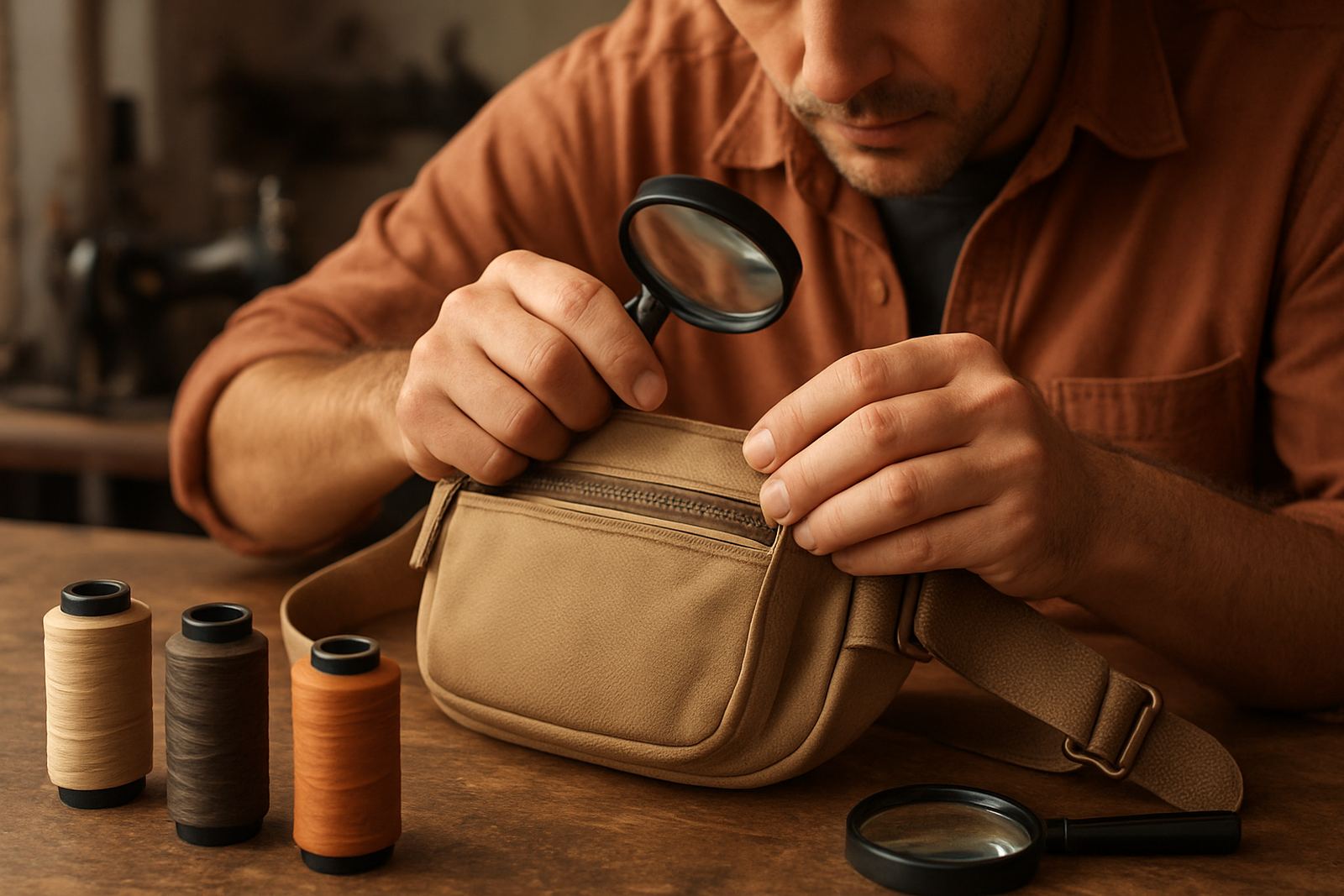
Our stitching assessment focuses on the parts of a belt bag that carry the most strain day to day. That includes seam lines along the main body, strap joins, buckle points, zip ends, pocket edges and any high-wear corners. We also look for loose thread, skipped stitches, pulled binding, edge fray and signs that a seam has started to open after repeat use or a heavy load.
For leather bags, we check whether the stitch holes are still holding cleanly or if the material has stretched around the seam. For canvas bags, we look at thread tension, fabric wear at fold points and any rubbing from zips or hardware. If the bag has been used in coastal humidity, we also note moisture marks and thread softening, which can affect how long the stitching lasts. A clean bag with healthy stitching may only need monitoring, while a bag with active opening needs quicker action.
- Seam integrity on body panels and gussets
- Strap attachment points and load-bearing stitching
- Thread wear, fray and loose ends
- Edge binding and pocket corners
- Signs of rubbing from zips or fittings
How The Process Works
Start by sending us clear photos through the enquiry form on our contact page. We normally ask for one full front view, one back view, close-ups of the affected stitch line and a picture of the bag in use if possible. If the issue is small, photos may be enough for an initial assessment. If the damage is unclear, we may ask for the bag to be brought in or sent through for a hands-on review.
Once we have the bag in hand, we inspect the stitch density, thread condition and any stress at the join points. We then advise on the best next step, which may be continued use with care, a limited repair, a stronger re-stitch or replacement advice if the fabric has worn through. You will get a plain explanation of what is safe to keep using and what should not be pushed further. No fluff, just practical advice that fits the bag.
- Submit photos or a brief description through the enquiry form
- Receive an initial review and next-step guidance
- Send or drop off the bag if a closer inspection is needed
- Get a written recommendation with use and care notes
Turnaround Time And What Affects It
Simple stitching checks are usually handled quickly, often within 1 to 3 working days after we receive the necessary photos or the bag itself. If the bag needs a full inspection because there are several stress points, or if we need to compare thread wear across different sections, please allow a bit more time. During busy periods around festivals, public holidays and year-end travel, turnaround can stretch slightly.
Cases that involve leather seams, heavy load marks or layered canvas with multiple joins may take longer because we want to advise properly, not guess. If load-shedding or courier delays affect drop-off and collection times, we will factor that in when giving you an expected completion window. We’ll keep you updated if anything changes and let you know when the bag is ready for the next step.
Most assessments are straightforward, but a bag with patchy repairs, stretched thread holes or water damage may need a more careful review. That extra time helps avoid a quick fix that only lasts a few weeks.
Pricing Approach For Stitching Checks
Our pricing is based on the amount of time needed to inspect the bag and the level of detail involved. A basic stitching assessment for a single issue is priced differently from a full review of several seams, strap points and edge wear. If the bag only needs advice and no further work, the cost stays lower. If repair work is recommended afterwards, that is quoted separately so you can decide what makes sense for the bag and the budget.
We keep pricing practical for everyday carry items. There is no point paying for more than the bag needs, especially if the damage is limited to one seam or a small area. For bulk order checks, such as when a retail client or event team has several bags with the same stitching concern, we can discuss a batch pricing approach. We do not like surprises, so any extra work is discussed before it goes ahead.
- Basic single-issue assessment
- Detailed multi-point stitching review
- Separate quote if repair is needed
- Batch pricing available for larger sets
When To Bring The Bag In For Inspection
Do not wait until a seam has opened fully. If you see thread lifting, a corner starting to gap, or a strap that feels less secure under load, it is time for a stitching assessment. Bags used for commuting, day trips, festivals and travel tend to take the most strain, especially when they carry water bottles, wallets, keys and small electronics in the same compartment.
Check the bag every 3 to 6 months if it is used often, and monthly if it is a daily carry item or regularly exposed to sun, sweat or salty air. Leather should be watched for drying and stiffening around stitch holes. Canvas should be checked for abrasion where straps meet the body and where the zip ends stop and start. A quick visual check at home can catch small issues early, but once a seam starts separating, the load shifts to the next line of stitching and the problem grows fast.
- Daily-use bags: inspect monthly
- Travel or festival bags: inspect every 3 to 6 months
- After heavy rain or coastal exposure: check seams once dry
- After a strap feels loose: arrange assessment promptly
How To Keep Stitching In Better Shape
Good stitching care starts with not overloading the bag. A belt bag is made for everyday carry, not for hauling heavy groceries or sharp-edged items that rub against the seams. Keep zips closed properly, avoid yanking on strap points and do not store the bag wet in a closed cupboard. Damp storage can weaken thread over time, especially in humid places like Durban or on the coast near Gqeberha.
For leather, wipe dust off with a dry cloth and keep the bag away from strong heat, heaters and long hours in direct sun. For canvas, brush off grit and let the bag air dry naturally after use. If you notice the first loose thread, trim only the frayed tail if it is clearly free, do not pull it. Pulling can open the seam further, which is a common mistake and it happens quicker than people think.
If you need help deciding whether a bag is still safe to carry, send us the details through the enquiry form. We’ll look at the stitching, explain the condition and advise the next step in plain language.
Key facts
| Assessment focus | Seams, strap anchors, pocket edges, zip ends and load-bearing stitch lines |
|---|---|
| Bag materials covered | Leather and canvas belt bags |
| Typical turnaround | 1 to 3 working days for simple checks, longer for multi-point reviews |
| Pricing method | Quoted by issue count, material type and inspection depth |
| Maintenance interval | Monthly for daily use, every 3 to 6 months for lighter use |
| Coverage area | Woodstock, Cape Town and shipping support across South Africa |